
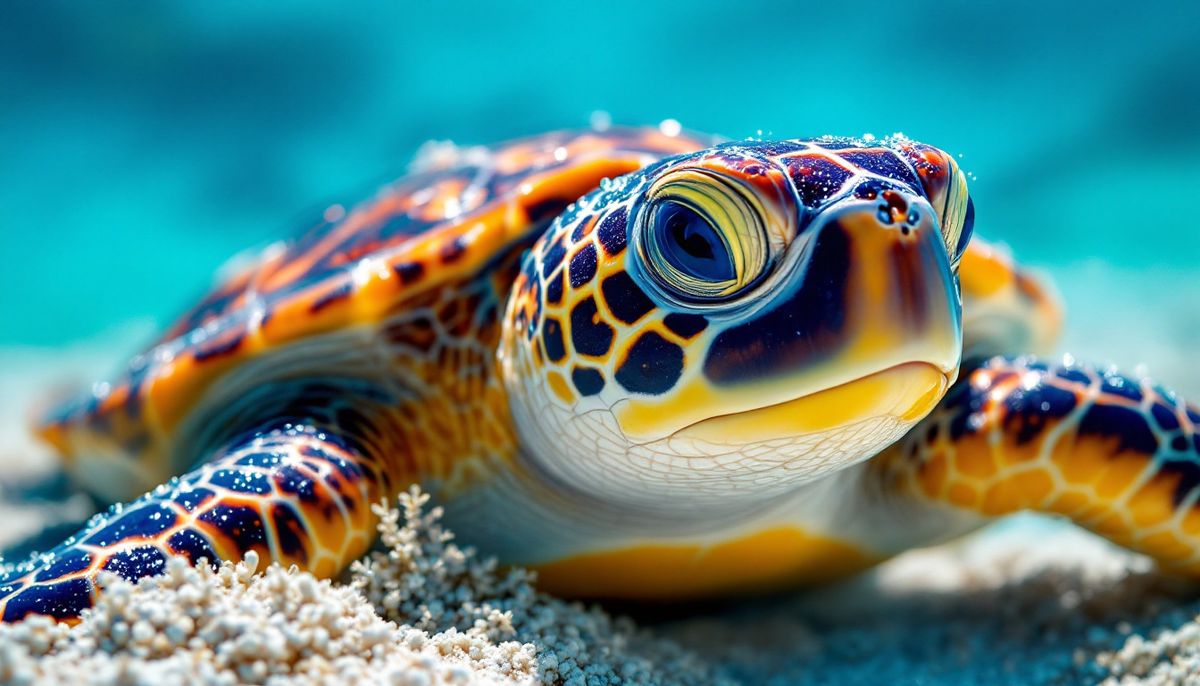
I always figured a sea turtle was basically a slow, mellow lawnmower with flippers. Cute, ancient, harmless, not much going on upstairs. Then I started reading, and it turns out these animals are running some of the strangest survival software on the planet. Their gender is set by beach temperature. They weep constantly to keep from dying. And they can navigate an entire ocean back to the exact patch of sand where they were born, using a sense we don’t even have. Here are five true things about sea turtles that completely rearranged how I see them.
Did you know the temperature of the sand decides whether a hatchling is male or female?
Sea turtles don’t have sex chromosomes doing the deciding. Instead, the temperature of the nest during a critical stretch of incubation sets the outcome. Cooler sand produces males, warmer sand produces females, with the tipping point sitting right around 88 degrees Fahrenheit. Biologists have a grim little mnemonic for it: “hot chicks and cool dudes.” A nest that runs even a couple degrees warm can come out overwhelmingly female, which is exactly the problem conservationists now lose sleep over as beaches heat up. A single mother’s clutch can hatch out mostly daughters or mostly sons depending on nothing more than the weather that summer. The nursery is the thermostat.
Did you know sea turtles cry constantly, and it’s the only reason they survive?
Watch a nesting sea turtle and you’ll see fat tears rolling down her face, and it looks heartbreaking. It’s the opposite. Those aren’t tears of sadness, they’re the turtle’s built-in desalination plant. Sea turtles drink seawater and eat salt-soaked prey all day, which would kill a human, so they run special salt glands right behind each eye that concentrate all that excess salt and flush it out as a thick, briny goo. On land, without the ocean to rinse it away, the “tears” become visible and even help wash sand out of their eyes while she nests. So the crying turtle isn’t mourning. She’s just quietly pumping out the salt that would otherwise poison her.
Did you know a female returns to lay her eggs on the exact beach where she was born?
This one still doesn’t feel real to me. A hatchling scrambles down the sand, disappears into the surf, and spends the next couple of decades wandering thousands of miles of open ocean. Then, when she’s finally ready to nest, she navigates all the way back to the same stretch of coastline where she hatched, sometimes within a few miles of the exact spot. Scientists call it “natal homing,” and the leading explanation is that turtles read the Earth’s magnetic field like a GPS coordinate, imprinting on the unique magnetic signature of their home beach as babies and locking onto it for life. She memorized an address she saw once, as a hatchling, and then found her way back across an entire ocean to use it.
Did you know a leatherback can dive deeper than most whales?
The leatherback is the giant of the family, reaching 7 feet long and topping 2,000 pounds, and it does not behave like the gentle grazer you’d expect. Leatherbacks routinely plunge to depths below 3,000 feet, and the record dive clocked in at over 4,000 feet, deeper than most whales ever go. Even stranger, this is a reptile that’s essentially cold-blooded, yet it can keep its body temperature well above the frigid water around it thanks to sheer size, a thick fatty layer, and clever plumbing that traps heat. That’s how it survives hunting jellyfish in near-freezing water off Canada and then turns around and nests on tropical beaches. A cold-blooded animal that heats itself, in the deep dark, chasing jelly.
Did you know sea turtles have been around long enough to have watched the dinosaurs go extinct?
Sea turtles are almost incomprehensibly old. Their lineage stretches back more than 100 million years, which means they were already gliding through ancient seas while T. rex was still stomping around on land. When the asteroid struck 66 million years ago and wiped out roughly three-quarters of life on Earth, including every non-bird dinosaur, sea turtles shrugged it off and kept swimming. They survived that. They survived ice ages, shifting continents, and oceans that rose and fell for eons. The cruel irony is that after outlasting literally everything, six of the seven species alive today are now threatened or endangered, mostly because of us. An animal that beat the asteroid is struggling to beat the fishing net.
Send this to the person who still thinks turtles are boring… they’ll never look at those “tears” the same way again.
