
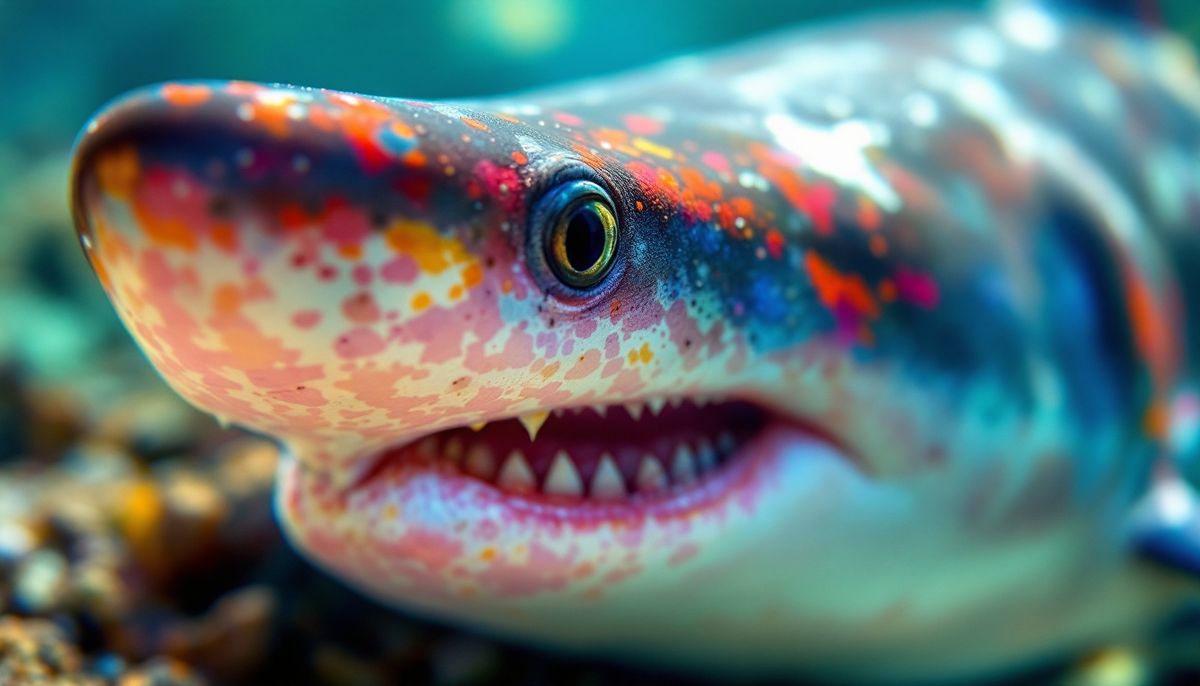
Every summer we do the same thing. We wade into the ocean, the theme music starts playing in our heads, and we treat sharks like they’re bloodthirsty torpedoes waiting for an ankle. The truth is stranger and a lot more humbling. These animals were cruising the oceans before trees figured out how to grow, before Saturn wore its famous rings, and before the star we steer by even switched on. Meanwhile, the thing you’re actually more likely to be killed by this summer is a farm animal. Here are five true things about sharks that should change how you feel about that dark shape in the water.
Did you know sharks are older than trees?
Sharks have been around for roughly 450 million years, which means their ancestors were patrolling the oceans during the Late Ordovician period. To put that in perspective, the first real trees didn’t show up on land until about 390 million years ago. Sharks predate them by a comfortable 60 million years. They also predate dinosaurs by around 200 million years, and they’ve survived all five of the planet’s mass extinction events, including the one that wiped out the dinosaurs entirely. Every tree you’ve ever climbed, every forest you’ve ever walked through, is a relative newcomer compared to the shark. The next time one glides past you, remember: you’re looking at a design so good that evolution basically stopped tinkering with it a quarter of a billion years ago.
Did you know sharks are older than Saturn’s rings and the North Star?
This is where it gets genuinely cosmic. Data from NASA’s Cassini mission suggests Saturn’s iconic rings are surprisingly young, most likely formed somewhere between 10 and 400 million years ago, well after sharks were already an established fact of life on Earth. And that bright dot we call the North Star? The brilliant primary star in the Polaris system is estimated to be only about 50 to 70 million years old. Sharks, at 450 million years, are older than the very star sailors have used to find their way home for centuries. Think about that. The light guiding ships across the ocean is younger than the creatures swimming beneath them. Sharks were here before Saturn got its jewelry and before the North Star started shining.
Did you know you’re more likely to be killed by a cow than a shark?
The numbers are almost insulting to the shark’s fearsome reputation. Sharks kill somewhere around six to ten people worldwide in a typical year. Cows, on the other hand, kill roughly 20 people a year in the United States alone, mostly through kicks, tramplings, and the occasional bad decision made near a bull. Even vending machines have historically racked up a body count, tipping over onto people who shake them for a stuck snack. Falling coconuts, lightning, hot tap water, and your own bathtub are all statistically more dangerous than the animal that gets its own week of television every summer. The scariest thing in the ocean, it turns out, is mostly just our imagination doing the heavy lifting.
Did you know sharks can’t get cavities?
While the rest of us are flossing and dreading the dentist, sharks are walking around, or rather swimming around, with a mouth full of naturally decay-proof teeth. Researchers discovered that the surface of shark teeth is coated in fluoride, the same cavity-fighting mineral we pay to have brushed and painted onto our own teeth. That built-in fluoride armor makes their teeth remarkably resistant to the acid and bacteria that cause cavities in humans. Add in the fact that sharks grow and lose thousands of teeth over a lifetime, replacing them on a conveyor belt as they wear out, and you’ve got an animal that will never once need a filling. No dentist, no drill, no waiting room magazines. Nature gave sharks the one dental plan none of us can buy.
Did you know some sharks alive today were born before the United States existed?
Meet the Greenland shark, the slowest-aging vertebrate we know of. Drifting through the frigid, deep waters of the North Atlantic and Arctic, these sharks grow at a glacial pace, less than half an inch per year, and a landmark 2016 study estimated their lifespan at somewhere between 250 and 500 years. The oldest individual in that study was estimated to be around 400 years old, give or take. Do the math and it’s genuinely staggering: a Greenland shark swimming out there right now could have been born in the early 1600s, before the Pilgrims landed at Plymouth, before the Declaration of Independence, before the United States was even an idea. Some of these animals have been quietly alive through the entire history of our country and then some. They don’t even reach maturity until around age 150. Compared to a Greenland shark, every human who has ever lived was just passing through.
Send this to the friend who’s afraid to swim this summer… they should be more worried about the cows.
