
July 18th
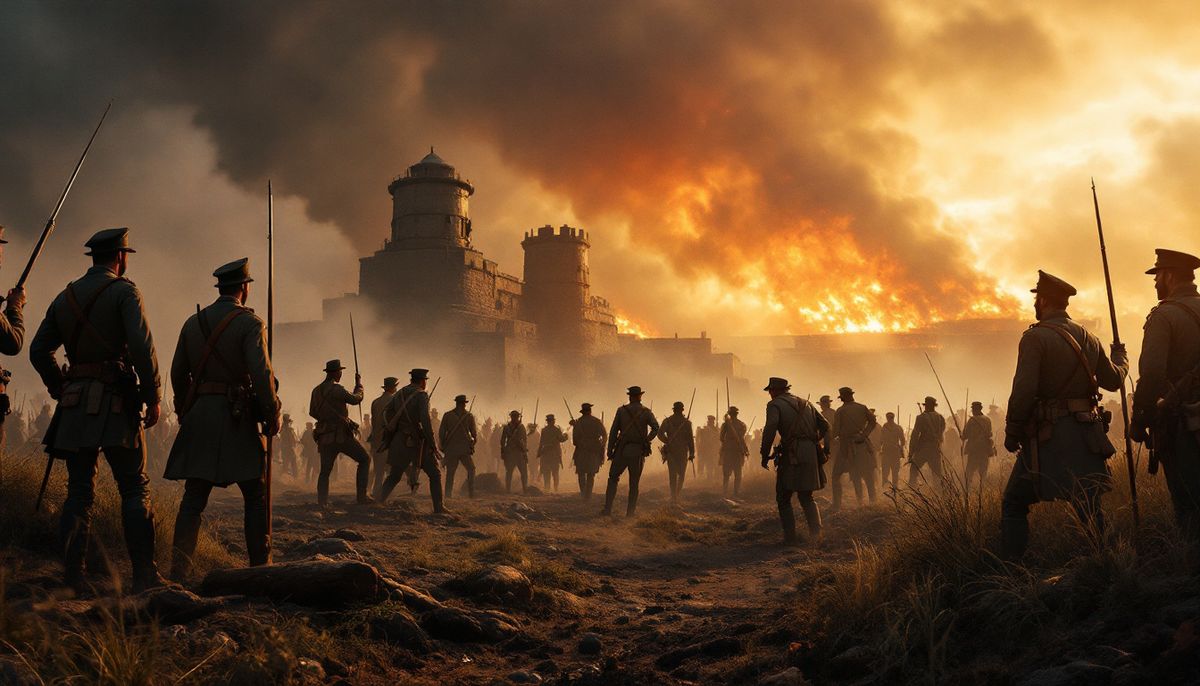
As the sun dropped over Charleston Harbor on July 18, 1863, six hundred soldiers of the 54th Massachusetts Volunteer Infantry fixed bayonets on a narrow strip of South Carolina beach. Ahead of them loomed Fort Wagner, a massive earthwork bristling with cannon, guarding the approach to the city where the Civil War had begun. The 54th was one of the first Black regiments raised in the North — and tonight, they had asked for the honor of leading the assault.
At their head stood Colonel Robert Gould Shaw, the 25-year-old son of Boston abolitionists. His men had marched two days through rain and sand with almost no food or sleep, and they knew exactly what was at stake. Much of the country still doubted that Black men would stand and fight. As dusk turned to dark, Shaw drew his sword, called out “Forward, Fifty-Fourth!” — and the regiment charged up the beach into a storm of shot and shell.
They made it all the way to the top. Shaw reached the parapet, urging his men on, and was shot dead at the crest. Around him the 54th fought hand-to-hand on the walls before finally being driven back. When the regiment’s flag bearer went down, Sergeant William H. Carney seized the colors, carried them to the base of the fort, planted them in the sand, and brought them back out again — taking wound after wound and refusing to let the banner fall. “The old flag never touched the ground,” he reported back — words that made him famous, and deeds that would make him the first Black American awarded the Medal of Honor.
The assault failed. Nearly half the regiment was killed, wounded, or captured. But the story of the 54th’s courage raced across the North and demolished the argument against Black soldiers once and for all — by war’s end, roughly 180,000 had served in the Union Army. Confederates buried Shaw in a mass grave with his men, intending it as an insult. His father refused to move the body: he could imagine no holier place for his son to rest. More than a century later, the 1989 film Glory carried the regiment’s charge to a whole new generation of Americans.
Also On This Day…
64 AD — Rome Burns (But Nobody Fiddled) On the night of July 18, 64 AD, fire broke out among the shops near Rome’s Circus Maximus and raged for the better part of a week, gutting most of the city’s fourteen districts. And no, Emperor Nero didn’t fiddle while it burned — the fiddle wouldn’t be invented for another 1,500 years, and ancient sources say Nero was thirty-five miles away when the flames erupted, then rushed back to organize shelters and relief. But the rumor that he’d sung of the fall of Troy while Rome glowed stuck to him anyway. Desperate to deflect the whispers, Nero pinned the blame on an obscure new sect called the Christians — and a legend, plus a persecution, was born.
1940 — FDR Breaks the Two-Term Tradition Every president since George Washington had honored the unwritten rule: two terms and out. Then, on July 18, 1940, the Democratic National Convention in Chicago nominated Franklin D. Roosevelt for an unprecedented third term. FDR had coyly refused to campaign for it, so Chicago’s political machine helped things along — a voice bellowing “We want Roosevelt!” through the arena’s loudspeakers turned out to be the city’s superintendent of sewers, stationed in a basement room with a microphone. With Hitler swallowing Europe, voters went along that November. Roosevelt won a fourth term too, and after his death the 22nd Amendment made sure no one would ever do it again.
1955 — Disneyland Opens Its Gates to the Public The day after its infamous press preview meltdown — the sweltering, overcrowded fiasco Walt Disney’s team forever called “Black Sunday” — Disneyland opened to actual paying customers on July 18, 1955. First through the turnstiles was Dave MacPherson, a 22-year-old college student who rode his motorcycle to the gates around midnight and waited alone in the dark all night to be first Funny thing: he didn’t ride a single ride — he had to get back for his summer job. Disney later awarded him a lifetime pass to the park, which grew to include Disney parks around the world. Not a bad trade for one long night in line.
1969 — Chappaquiddick Changes American Politics Late on the night of July 18, 1969, Senator Ted Kennedy drove his Oldsmobile off the narrow Dike Bridge on Chappaquiddick Island, Massachusetts, after leaving a party. Kennedy escaped the submerged car; his passenger, 28-year-old campaign worker Mary Jo Kopechne, did not. Kennedy failed to report the accident until the next morning, and ultimately pleaded guilty to leaving the scene, receiving a two-month suspended sentence. The questions that followed him out of that pond never went away — and the man many assumed would be the next Kennedy in the White House never got there. Two days later, Apollo 11 landed on the Moon and swept the story from the front pages.
1976 — The Scoreboard That Couldn’t Count to 10 On July 18, 1976, at the Montreal Olympics, a 14-year-old Romanian gymnast named Nadia Comaneci finished her routine on the uneven bars — and the arena scoreboard flashed “1.00.” Confusion rippled through the crowd until the announcement came: the judges had awarded the first perfect 10 in Olympic gymnastics history, and the scoreboard simply couldn’t display it. Before the Games, the scoreboard’s builders had asked whether four digits might be needed for a perfect score and were told it was impossible. Nadia scored six more perfect 10s that week and went home with three gold medals — and every scoreboard after that learned to count to 10.
From six hundred men charging a fortress at dusk, to a president shattering a 150-year tradition, to a 14-year-old breaking the scoreboard itself — July 18th belongs to the people who attempted what everyone said couldn’t be done.
