
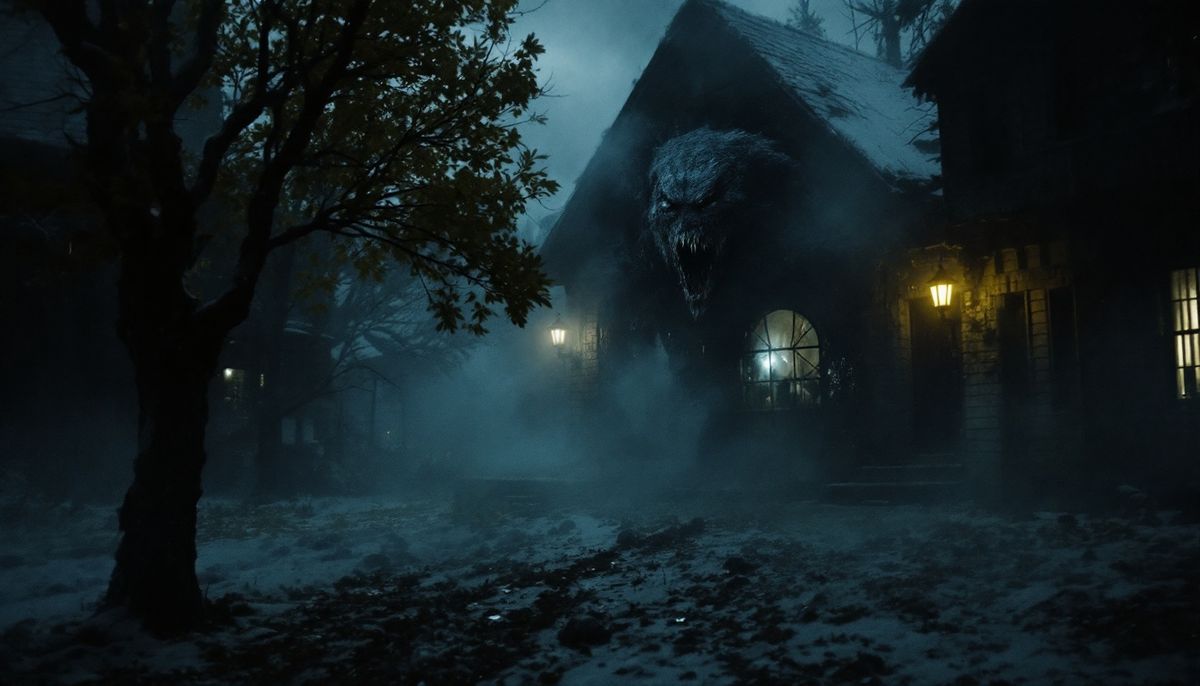
Let me tell you about the strangest animal in American history — a creature that was captured, photographed, displayed at a county fair, debunked by the threat of a Smithsonian inspection, and confessed to be a fraud by its own discoverer… and which, more than a century later, a town in northern Wisconsin still refuses to stop believing in. Keep one thing in mind as we go: almost everything in this story is documented. The newspaper accounts are real. The photographs exist. The confession happened. And somehow, none of it settled anything.
It starts in 1893, in the lumber town of Rhinelander, Wisconsin, with a timber cruiser named Eugene Shepard. Shepard was a land surveyor by trade and, by every account we have, a showman by nature — the kind of man other lumberjacks warned you about at the card table. That fall, Shepard announced to the local press that he and a party of brave men had cornered a monster in the woods outside town: seven feet long, with the head of a frog, the grinning face of a giant elephant, thick short legs set off by huge claws, the back of a dinosaur, and a long tail with spears at the end. He called it the Hodag. He said it smelled of a combination of buzzard meat and skunk perfume. He said they had to kill it with dynamite. And he produced a photograph — a ring of somber men with pitchforks around a charred, horned carcass — that ran in newspapers as more or less straight news.
Now here’s where Shepard, having gotten away with it once, went bigger. In 1896, he announced he’d captured a live Hodag — subdued it, he said, by blocking its cave and knocking it out with a chloroform-soaked sponge on the end of a pole. He put the beast on display in a dimly lit tent at Oneida County’s first county fair. Visitors paid their coins, squinted into the shadows, and watched the creature move — because it did move, growling and shifting while Shepard’s sons worked wires from outside the tent. People came from all over the region. Newspapers spread the story to Chicago and beyond. The Hodag was, briefly, the most famous animal in America that had never existed.
What killed it wasn’t a hunter — it was scientists. Word reached Shepard that experts connected with the Smithsonian Institution intended to travel to Wisconsin and examine the creature for themselves. Faced with the prospect of professionals inspecting his monster in good light, Shepard confessed: the Hodag was a carved wooden body — likely a sculpted stump — dressed in ox hide, with cattle horns and steel claws fitted on. A hoax, start to finish. And here’s the detail I find genuinely revealing: the confession barely dented the legend. The crowds had loved it. The town had loved it. Rhinelander had been put on the map by a monster, and nobody was in a hurry to take it back off.
But hold on — because if you stop there, you’ve missed the layer underneath, and it’s the layer that earns this story its place around the campfire. Shepard didn’t invent the Hodag out of thin air. The name and the beast were already circulating in lumberjack folklore across the Great Lakes camps before he ever staged his photograph. In those older tales, the Hodag was something darker: the restless spirit of the lumber ox, risen from the ashes after its body was burned — seven years of profanity and abuse suffered in the logging camps taking form as a horned, vengeful thing in the pine dark. Shepard was a promoter, but he was promoting something the men in those camps already claimed to have heard moving out past the firelight. Where did that story come from? Nobody can tell you. Folklorists have traced versions of it through the northwoods, but the original sighting — if there was one — is lost.
And the sightings, such as they are, never entirely stopped. To this day, Rhinelander locals will tell you about strange sounds in the forest, about something glimpsed crossing a logging road at dusk. Are these serious claims? I’ll be straight with you: not one has ever been independently verified, and the town has every commercial reason to keep the legend warm — the Hodag is now Rhinelander’s official symbol, its high school mascot, the name of its country music festival, and the subject of a giant fiberglass statue grinning outside the chamber of commerce. Skeptics say, reasonably, that this is a hoax that simply never stopped paying. A confessed fraud, embraced as a brand.
Maybe. Probably, even. But here’s what keeps me up about the Hodag: hoaxes are supposed to die when they’re confessed. This one didn’t. The men in the 1896 tent knew, within months, that they’d been fooled — and they kept telling the story anyway, and their grandchildren kept telling it, and tonight, somewhere north of Rhinelander, somebody is standing at the edge of the tree line swearing they heard something big move in the dark. Eugene Shepard built a monster out of a stump and some ox hide. What nobody has ever explained is the thing he built it for — the older legend, born nameless in the logging camps, that was waiting in those woods before he got there. And as far as anyone can prove, it’s waiting still.
Unsolved Mystery
