
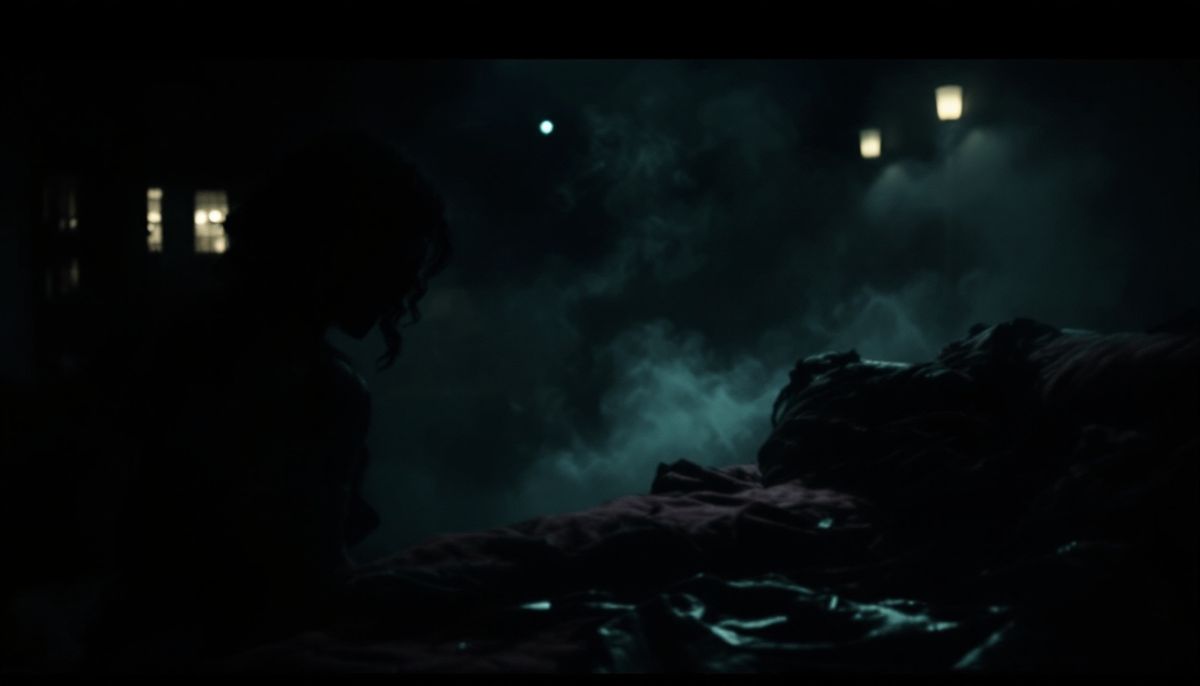
Let me take you back to a cold, gray morning in Los Angeles — January 15, 1947. A young mother is walking her little girl along a vacant lot in the Leimert Park neighborhood, the kind of weedy, half-developed block that dotted the edges of a city still booming after the war. At first she thinks she’s spotted a discarded store mannequin lying in the grass near the sidewalk. Then she looks again. It isn’t a mannequin. It’s a young woman, and what’s been done to her is so far beyond ordinary cruelty that the detail still stops people cold nearly eighty years later. I’ll tread carefully here, because this was a real person with a real family, and she deserves that. So I’ll say only what the record says: she had been killed somewhere else and carefully placed there, and the scene was so clean — not a drop of blood in the grass — that the police understood immediately they were dealing with something methodical, something patient, something genuinely chilling.
The woman had no identification on her. But this is where the story takes its first strange turn, the kind of detail that makes you remember 1947 was a more modern moment than we tend to picture. Investigators wired her fingerprints to the FBI in Washington using “Soundphoto,” a primitive forerunner of the fax machine that newspapers used to send images across the country. And the Bureau came back with a name in just under an hour — fifty-six minutes, according to the FBI’s own account. The young woman was Elizabeth Short. She was twenty-two years old.
She’d been born in Hyde Park, Massachusetts, in the summer of 1924, and she’d drifted west the way so many young people did in those years — through New England and Florida and finally to California, chasing the warm light and the promise of the movies. The story that hardened into legend is that she was an aspiring actress, though the honest truth is that no one ever found a single acting credit or studio job to her name. She was, by most accounts, a striking young woman who liked to dress in black, who moved between rooming houses and acquaintances, who was still figuring out what her life was going to be. She never got the chance to find out. And almost everything written about her since has had to fight through a fog of rumor to reach the actual person underneath.
Then came the press, and the press is really the second main character in this story. Los Angeles newspapers were locked in a brutal circulation war in 1947, and a murder this lurid was, to them, oxygen. Within days the reporters had given Elizabeth Short a nickname that would outlive everyone connected to the case: the Black Dahlia. The likeliest origin is a film noir thriller from the year before called The Blue Dahlia, twisted into something darker to fit the black clothes she was said to favor. It was the kind of name that sold papers — atmospheric, mysterious, impossible to forget — and that’s exactly the problem. The nickname turned a grieving family’s tragedy into a citywide sensation, and the frenzy that followed didn’t just report on the investigation. It actively warped it.
Here’s how. The papers chased every lead, printed every rumor, and competed so fiercely for scoops that they sometimes got to witnesses before the detectives did. And the case attracted something investigators dread: false confessors. Dozens of people walked into police stations claiming to be the killer — lonely, troubled, attention-starved souls who muddied the water until the detectives could barely tell signal from noise. Add to that the genuinely eerie contact from someone claiming to be the actual murderer. A caller phoned the editor of the Examiner and promised to mail “some souvenirs.” Days later an envelope arrived, scrubbed clean and addressed in pasted letters, containing Elizabeth Short’s birth certificate, her photographs, her address book. Taunting, deliberate, and — like everything else in this case — leading nowhere.
So who did it? The LAPD launched one of the largest investigations in the city’s history, and over the years the file swelled to more than 150 suspects. They never made an arrest. Because the cuts on the body were so precise, detectives long suspected the killer had medical or surgical training — a doctor, a mortician, someone who knew how a body was put together. A man named Robert “Red” Manley, the last person known to have seen her alive, was hauled in and questioned hard, then cleared. The names that still get whispered today came later. There’s Leslie Dillon, a bellhop and former mortician’s assistant, the focus of a 2017 book that also pointed at a possibly corrupt detective who may have steered the investigation away from the truth. And there’s the most famous name of all: Dr. George Hodel, a Los Angeles physician who was a serious enough suspect that police actually bugged his home in 1950. His own son, a retired LAPD detective named Steve Hodel, has spent decades building a case that his father was the killer — even bringing in a cadaver dog to sniff the old family property.
And here’s where I have to be the honest storyteller, the way I always try to be. None of it has ever been proven. Every theory — the surgeon, the bellhop, the doctor whose own son accuses him — is built on circumstance, inference, and the maddening gaps left by a 1947 investigation conducted under a media circus. The physical evidence is gone or degraded. The witnesses are long dead. The taunting letters led nowhere. What we’re left with is a constellation of compelling maybes and not one fact a court could ever convict on. It is, in the truest sense, an open case — and given that everyone who could have known the answer has passed on, it will almost certainly stay open forever.
So I’ll leave you where the evidence actually leaves us, which is standing in that vacant lot on a cold morning in 1947 with more questions than the city of Los Angeles has ever been able to answer. A young woman came west with the same dream a million others carried, and instead of a name in lights she got a nickname in headlines and a place in history she never asked for. The detectives chased 150 shadows. The newspapers sold their papers and moved on. And Elizabeth Short — not the Black Dahlia, but Elizabeth, twenty-two years old, born on the twenty-ninth of July — became the heart of the most famous unsolved murder in American history. Somewhere out past all those decades of theories and books and whispered names, there’s a true answer to what happened to her. We just never found it. And the longer the silence holds, the more it feels like we never will.
Unsolved Mystery
