
Let me tell you about the strangest week in the history of the city of Strasbourg — and I want you to keep one thing in mind the whole time: none of this is folklore. It’s in the city council records. It’s in physicians’ notes and cathedral sermons and merchant chronicles. Real bureaucrats wrote this down, in real time, with the weary tone of men filing paperwork about something they could not stop.
It began in mid-July of 1518, on a cobbled street in what was then a free city of the Holy Roman Empire. A woman known to history only as Frau Troffea stepped out of her house and began to dance. No music. No festival. No partner. She danced through the heat of the day until she collapsed — and when she woke, she got up and danced again, on feet that witnesses said were swollen and bloody. Her husband begged her to stop. She couldn’t. Or wouldn’t. To this day, nobody can tell you which — and I’d argue that single distinction is the whole mystery.
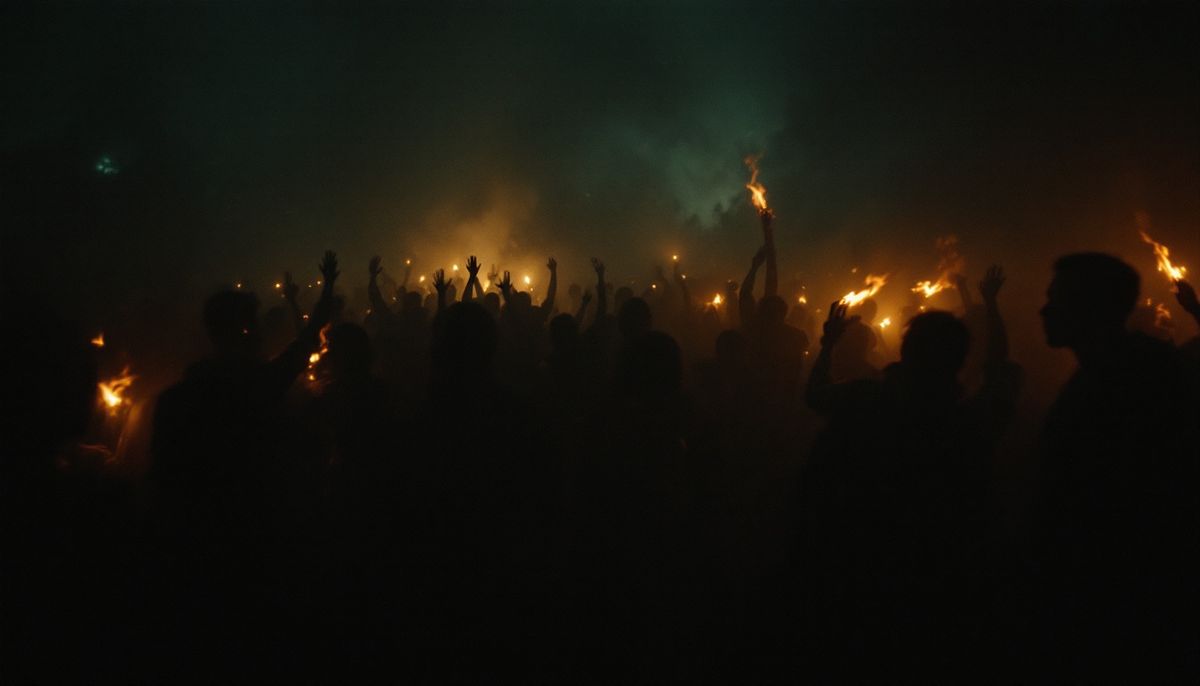
Here’s where it goes from strange to genuinely frightening: it spread. Within a week, roughly three dozen people had joined her — dancing in the streets, in doorways, in the market square, day and night. Within a month, chroniclers put the number as high as 400. And these were not people having a good time. Accounts describe dancers screaming for help, weeping, begging bystanders to free them from whatever had hold of their legs. Some reportedly collapsed and died — of heart attack, stroke, sheer exhaustion. (You’ll sometimes see a figure of “fifteen deaths a day” quoted; I’ll be straight with you — that number comes from later retellings and historians still argue about it. That people died is widely accepted. How many is legend’s territory.)
Now, what did the authorities do? This is my favorite terrible detail in the whole affair. The city consulted its physicians, who diagnosed “hot blood” and concluded — I swear this is documented — that the afflicted simply needed to dance it out of their systems. So Strasbourg’s leaders opened the guild halls. They cleared the grain market. They built a wooden stage. They hired musicians and professional dancers to keep everyone moving. They prescribed the disease as the cure. And the plague, predictably, got worse — the music seems to have drawn more people into the whirlpool. Only when the council reversed course entirely — banning music, hauling the dancers off in wagons to a shrine of St. Vitus in the hills near Saverne, putting red shoes on their feet and holy figures in their hands — did the dancing finally sputter out. By early September, it was over. As suddenly and inexplicably as it began.
So what actually happened? For a long time the fashionable answer was ergot — a fungus that grows on damp rye and produces compounds chemically related to LSD. Poisoned bread, hallucinating peasants, case closed. Except there’s a problem: ergot poisoning causes convulsions and cuts off blood flow to the limbs. It does not grant you the ability to dance, coordinated and upright, for days on end. Most historians who’ve looked hard at this — John Waller foremost among them — have set the ergot theory aside.
Waller’s alternative is, if anything, eerier. He points out that Strasbourg in 1518 was a city at the end of its rope — years of crop failures, famine, syphilis, smallpox, orphans begging in the streets. And its people held a specific, fervent belief: that St. Vitus, if angered, could curse you to dance. Waller argues that extreme despair plus that shared belief produced a mass psychogenic event — a trance state that spread like a contagion of the mind. Hundreds of bodies acting out a curse because, on some level deeper than choice, they believed in it. The evidence fits. It also, notably, wasn’t the first time — dancing manias had erupted along the Rhine before, including a massive outbreak in 1374. Whatever this was, it had happened before, and then it stopped happening. Forever.
And that’s where I have to leave you, because that’s where the record leaves everyone. Mass hysteria is a label, not a mechanism — no one can tell you why Frau Troffea’s feet started moving on that particular July morning, why the trance seized hundreds of her neighbors but spared thousands of others, or why this phenomenon haunted one river valley for a few centuries and then vanished from the earth. Five hundred years of medicine later, the best minds we have are still standing at the edge of that market square, watching the dancers, unable to explain the music only they could hear.
Unsolved Mystery
