
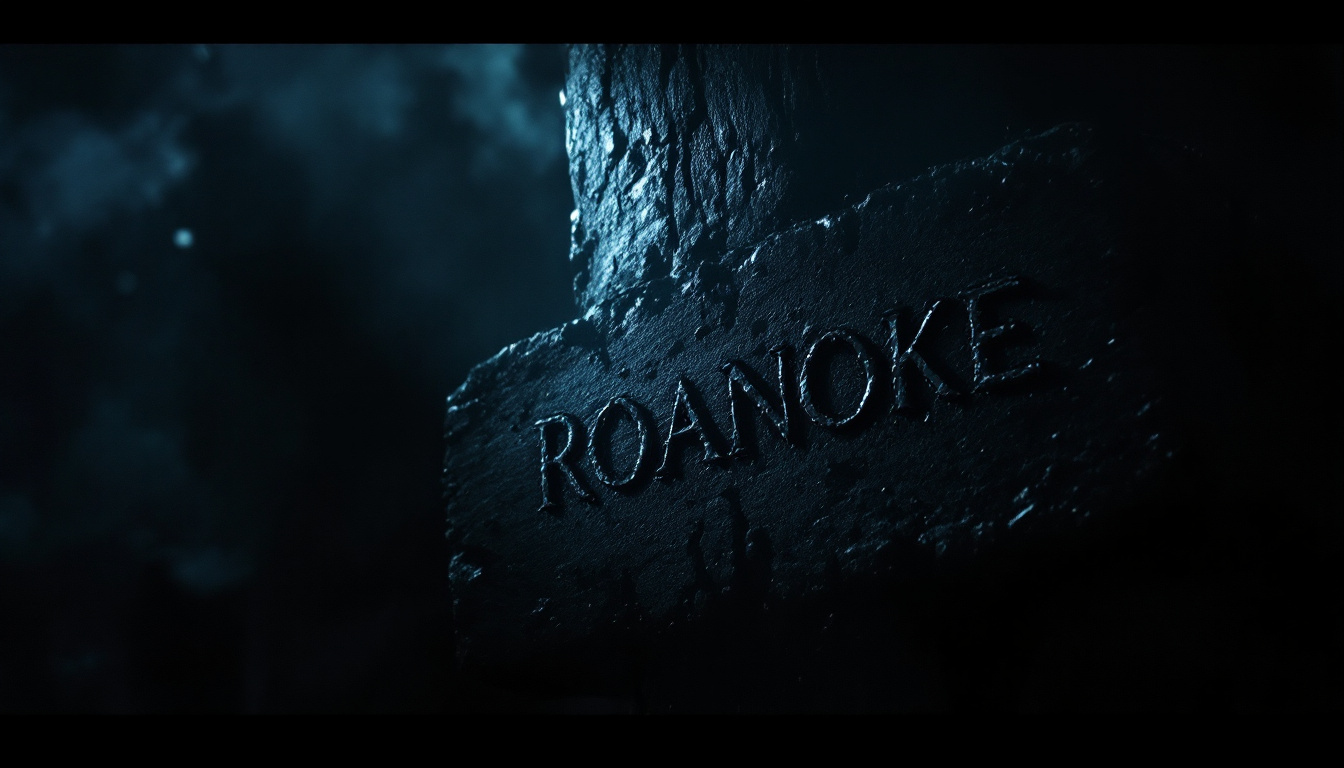
Let me set the scene for you, because this is one I keep coming back to, late at night, when the fire’s burned down to embers. It’s August of 1590. A weathered Englishman named John White stands on the deck of a ship rolling in the surf off the coast of what we now call North Carolina. He is an artist, a mapmaker, and a grandfather — and he has not seen his family in three long years. Three years earlier, in 1587, he’d left more than a hundred English colonists on a low, sandy island called Roanoke and sailed back to England to fetch supplies. Among those he left behind were his daughter, Eleanor, and his granddaughter — a baby girl named Virginia Dare, the first English child born in America, born just days before he departed. Now he’s finally returning, on her third birthday no less, and as the boats push toward shore, he does something that breaks my heart every time I picture it: he orders his men to play a trumpet, and to sing English songs, so that his people will know friends have come. He wants them to hear him before they see him.
But no one answers. No voice carries back across the water. And here’s the part that’s documented, not invented — this is the real, recorded history. When White finally got ashore and climbed up to the settlement, the houses were gone. Not burned, mind you. Taken down, dismantled, as if people had packed up deliberately. A defensive palisade of tree trunks had been built around the cleared space. And there, carved into one of the main posts of that palisade, in “fair capital letters,” were seven letters: CROATOAN. Nearby, on a tree, someone had begun carving another word and stopped — just three letters, C R O. The colony of more than a hundred men, women, and children had simply… vanished. No bodies. No graves. No sign of a struggle.
Now, here’s what most folks don’t know, and it’s the detail that turns this from a horror story into a genuine puzzle. Before White had left in 1587, he and the colonists had agreed on a code. If they ever had to abandon Roanoke, they would carve the name of wherever they’d gone. And — this is the crucial bit — if they had been forced to leave in danger, under attack, they would carve a Maltese cross above the name as a distress signal. White searched that post. He searched that tree. There was no cross. To the day he died, John White held onto that absence like a lifeline, because it told him his family hadn’t been slaughtered or dragged off. They’d left peacefully, of their own accord, and they’d told him exactly where: Croatoan — the island we now call Hatteras, home to a friendly tribe, the Croatoan people, with whom the English had a decent relationship. So why is this still a mystery? Why didn’t he just sail down to Hatteras and find them?
Because the sea wouldn’t let him. And this is where I always feel the cruelty of it most keenly. A storm came up — a vicious one. White’s ships lost anchors, nearly wrecked on the shoals, and his crew, hungry and frightened and far from the carefree mood of a rescue mission, refused to go the short distance south to Croatoan. They turned the bows toward England instead. John White, governor of the colony, grandfather of little Virginia Dare, was carried away from his family by his own panicked sailors, just a few miles short of an answer. He never came back. He never saw any of them again. He died a few years later, and as far as we know, he went to his grave not knowing whether his daughter and granddaughter were alive or dead, free or captive. That’s not legend, friend. That’s the documented end of John White’s story, and it’s about as sad an ending as history hands us.
So where did they go? Here’s where I have to be honest with you and separate the firelight from the facts, because over four centuries this tale has grown some wild barnacles. The romantic legends say ghosts, or a white doe that was really Virginia Dare transformed by a sorcerer, or a massacre that left no trace. Set those aside. The theory that serious historians and archaeologists actually take seriously is far quieter and, to my mind, far more haunting: the colonists didn’t die. They assimilated. They walked off Roanoke and folded themselves into the Native communities around them, and over the generations, the English simply dissolved into the people of the coast. The carved word points straight at it — Croatoan, the friendly island. And there are tantalizing crumbs scattered across the centuries that seem to whisper yes. A century later, around 1700, an English surveyor named John Lawson visited Hatteras Island and met the people living there, who told him that several of their ancestors had been white — and Lawson noted, with some surprise, that a number of them had gray eyes, a trait you simply don’t find in a purely Native population.
And the crumbs keep turning up, right into our own time. Archaeologists digging at a place called the Cape Creek site on Hatteras — a Croatoan town and trading hub — have pulled up English objects: a piece of a sword hilt, a writing slate, bits of worked metal, exactly the kind of European goods you’d expect if English families had settled in and lived alongside the tribe. Then there’s the strangest clue of all, and I love this one. In 2012, researchers asked the British Museum to look beneath two little paper patches glued onto an old map that John White himself had drawn of the Carolina coast. When they shone light through the paper, they found hidden symbols underneath — a drawing of a fort, deliberately covered up, sitting some fifty miles inland to the west, near Salmon Creek in Bertie County. Was that the colonists’ real planned destination, a secret kept off the public map? Archaeologists went and dug there too, at sites they cautiously nicknamed “Site X” and “Site Y,” and they found Tudor-era English pottery — the right kind, the right age — suggesting a small band of colonists may have settled inland while others went to Croatoan. The leading idea now isn’t that the colony vanished at all. It’s that it split up, and scattered, and survived by ceasing to be English.
But — and you knew there’d be a but — none of it is proof. Not really. Skeptics, good careful ones, point out that English trade goods could have reached those Native sites through ordinary trade, passed hand to hand, without a single colonist ever living there. A few shards of pottery and some metal flakes are not a roster of names. Nobody has found a grave that says here lies Eleanor Dare. Nobody has found a single colonist’s bones, or a diary, or a definitive, undeniable thread connecting any living family tree all the way back to those 117 souls. The Lumbee people of North Carolina have long held a tradition that they descend in part from the lost colonists — and it’s a beautiful, plausible tradition — but tradition is not the same as a sealed, signed case. The truth is that after more than four hundred years, more excavations, and modern science, we still cannot say with certainty what became of the men, women, and children of Roanoke.
So I’ll leave you where John White was left — standing on a beach, staring at a single word gouged into a post, with the wind picking up and the answer just out of reach across the water. Maybe they walked south and lived out their lives as Croatoan, their English blood thinning gently into the generations until a surveyor noticed gray eyes a hundred years on. Maybe they went west to that hidden fort on the secret map. Maybe both. Maybe something we haven’t guessed at all. CROATOAN. Seven letters. A whole colony of people who stepped off the edge of recorded history and never stepped back on. And every time I think I’ve made my peace with it, I remember that grandfather, playing a trumpet to an empty shore, and I find I can’t quite let it go either.
Unsolved Mystery
