
May 21st
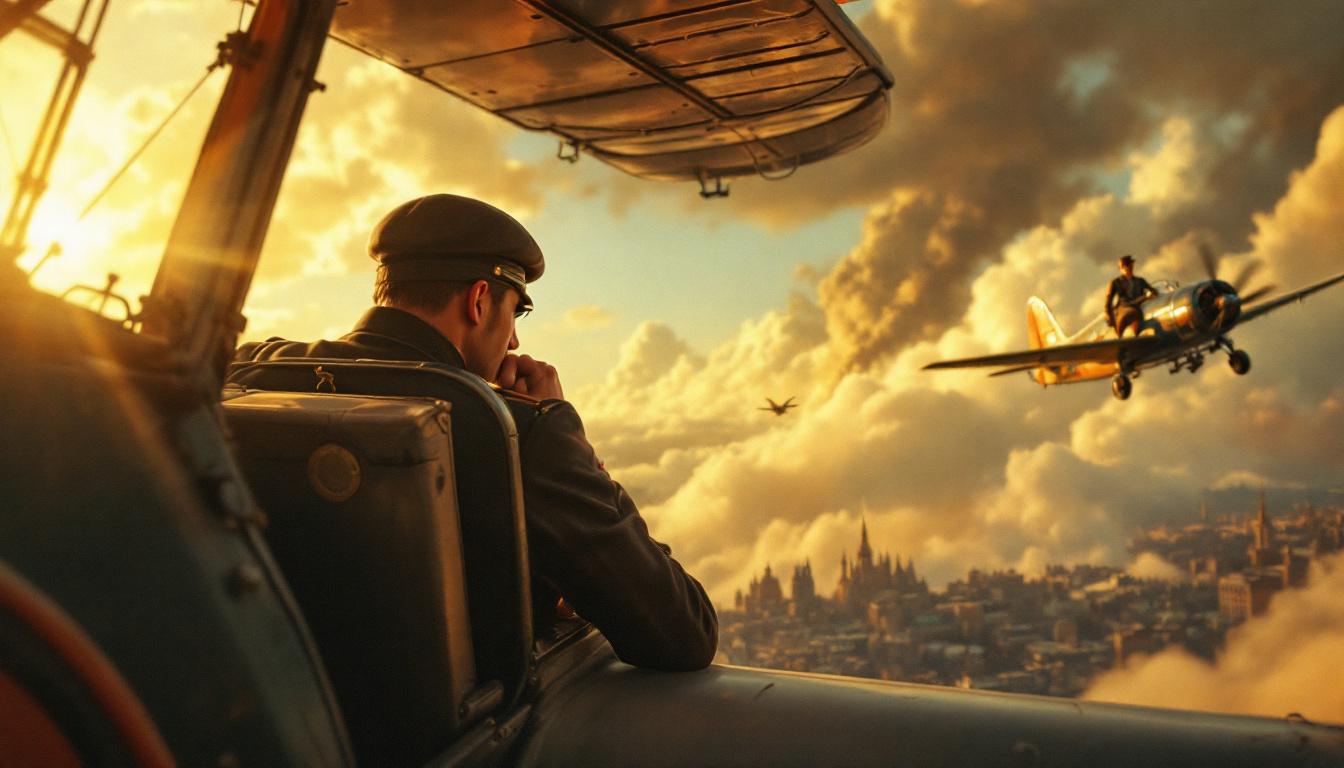
For 33 and a half hours, almost nobody on Earth knew if Charles Lindbergh was alive. He had left Long Island the morning before in a single-engine plane called the Spirit of St. Louis, alone, with no radio, no parachute, no co-pilot, and not even a forward windshield — the fuel tank sat where the windshield should have been, so he steered partly by a periscope and partly by sticking his head out the side. He had stayed awake the entire time, fighting sleet, fog, ice on the wings, and a fatigue so heavy he later said he saw ghostly shapes drifting through the cabin and talking to him. He was 25 years old.
On the evening of May 21, 1927, the people of Paris decided to wait for him anyway. By nightfall, an estimated 150,000 of them were jamming the roads to Le Bourget airfield, hoping. When the little gray plane finally dropped out of the dark and rolled to a stop, the crowd did not politely applaud. Lines of soldiers went down. Steel fences went down. A wall of cheering, weeping strangers stampeded across the field and swarmed the Spirit of St. Louis before its propeller had even stopped turning. They tore his name from the plane in souvenir scraps. They pulled the door open and hauled the exhausted young man straight out of the cockpit, hoisting him over their heads and carrying him across the field on a tide of shoulders for the better part of half an hour before the police could rescue him.
He had become, in a day and a half, the most famous person on the planet. A 25-year-old airmail pilot from Little Falls, Minnesota — a man who had never crossed an ocean by any means before this one — had flown 3,600 miles solo and proved it could be done. He woke up that morning a working pilot. He landed that night a legend, and the world has never quite handed out fame on that scale, that fast, again.
Also On This Day…
1471 — A king was quietly killed in the Tower of London On May 21, 1471, King Henry VI of England died in the Tower of London — and almost nobody believed the official story that he had passed away from “pure displeasure and melancholy.” Henry had been the gentle, deeply troubled monarch at the center of the Wars of the Roses, a man who suffered breakdowns and was repeatedly shuffled on and off the throne. His rival, Edward IV, had just crushed the last Lancastrian army. With Henry’s only son dead in battle, Henry himself was suddenly worth far more dead than alive. He died that night. Most historians have spent the five centuries since assuming he was murdered.
1881 — Clara Barton built a humanitarian army out of nothing On May 21, 1881, a 59-year-old former battlefield nurse named Clara Barton founded the American Red Cross in Washington, D.C. During the Civil War she had earned the nickname “the Angel of the Battlefield” for hauling supplies and nursing the wounded under fire. She first heard of the international Red Cross movement while recovering from exhaustion in Europe — and then spent years badgering a reluctant United States government to join it. She finally simply started the American branch herself and ran it as president for the next 23 years. The organization she launched is still answering disaster calls today.
1924 — Two brilliant students tried to commit “the perfect crime” On May 21, 1924, two wealthy, highly intelligent University of Chicago students named Nathan Leopold and Richard Loeb murdered 14-year-old Bobby Franks. They had no real motive — they wanted to prove they were clever enough to commit a flawless, unsolvable crime. Their plan unraveled almost immediately when Leopold dropped his distinctive eyeglasses near the body. The case became a national sensation, and the legendary attorney Clarence Darrow took it on, delivering a marathon courtroom argument against the death penalty that helped save them from execution.
1932 — Amelia Earhart climbed out of her plane in a cow pasture On May 21, 1932 — five years to the day after Lindbergh’s landing — Amelia Earhart completed her own solo flight across the Atlantic, becoming the first woman ever to do it. The flight was brutal: a leaky fuel tank, a cracked weld that shot flames out of the engine, ice on the wings, and a terrifying 3,000-foot drop toward the waves. She had aimed for Paris. Instead she came down in a farmer’s field near Londonderry, Northern Ireland. When a startled farmhand asked if she had flown far, Earhart reportedly answered, “From America.”
1972 — A man with a hammer attacked Michelangelo’s Pietà On May 21, 1972, a Hungarian-born geologist named Laszlo Toth jumped a railing in St. Peter’s Basilica, raised a hammer, and shouted, “I am Jesus Christ — risen from the dead!” In about fifteen blows he knocked the arm off Michelangelo’s Pietà, broke a piece of the Virgin Mary’s nose, and chipped her eyelid. Horrified bystanders — including an American sculptor — dragged him away. Restorers spent roughly ten months piecing the masterpiece back together. Ever since, one of the most beloved sculptures on Earth has stood behind bulletproof glass.
1980 — “I am your father” arrived in theaters On May 21, 1980, Star Wars: Episode V — The Empire Strikes Back opened in North American theaters. Audiences expecting a fun sequel got something darker and stranger: heroes losing, a hand cut off, a city in the clouds, and a twist so closely guarded that even some of the cast didn’t know the real line. Decades later it is routinely called the greatest Star Wars film and one of the best sequels ever made — proof that sometimes the middle chapter is the one people never forget.
It’s a wild span for a single date on the calendar — a murdered medieval king, a nurse who built the Red Cross, a tragic “perfect crime,” two pilots conquering the same ocean exactly five years apart, a hammer swung at a masterpiece, and the day audiences learned who Luke Skywalker’s father really was. But the loudest thing that ever happened on May 21 was 150,000 Parisians rushing a field in the dark to carry a sleepless 25-year-old off the ground.
