June 4th
By the morning of June 4, 1942, the United States Navy was the underdog and everyone knew it. Six months earlier, Pearl Harbor had left the Pacific Fleet smoldering. Now Japan was sending a massive armada toward Midway Atoll — a speck of an island roughly halfway between America and Asia — to finish the job, lure out what was left of the U.S. carriers, and sink them for good. The Japanese had four fleet carriers steaming toward Midway. The Americans had three, two of them patched together in a hurry, and a whole lot of hope.
But the Americans had one thing the Japanese didn’t know about: they’d cracked the code. Navy cryptanalysts in Hawaii had been quietly reading enough of Japan’s radio traffic to figure out where the attack was coming and roughly when. So instead of being ambushed, the U.S. carriers were waiting, hidden, ready to ambush the ambushers. It was one of the great intelligence coups in military history — and it set the stage for one of the strangest, luckiest, most consequential mornings the U.S. Navy ever had.
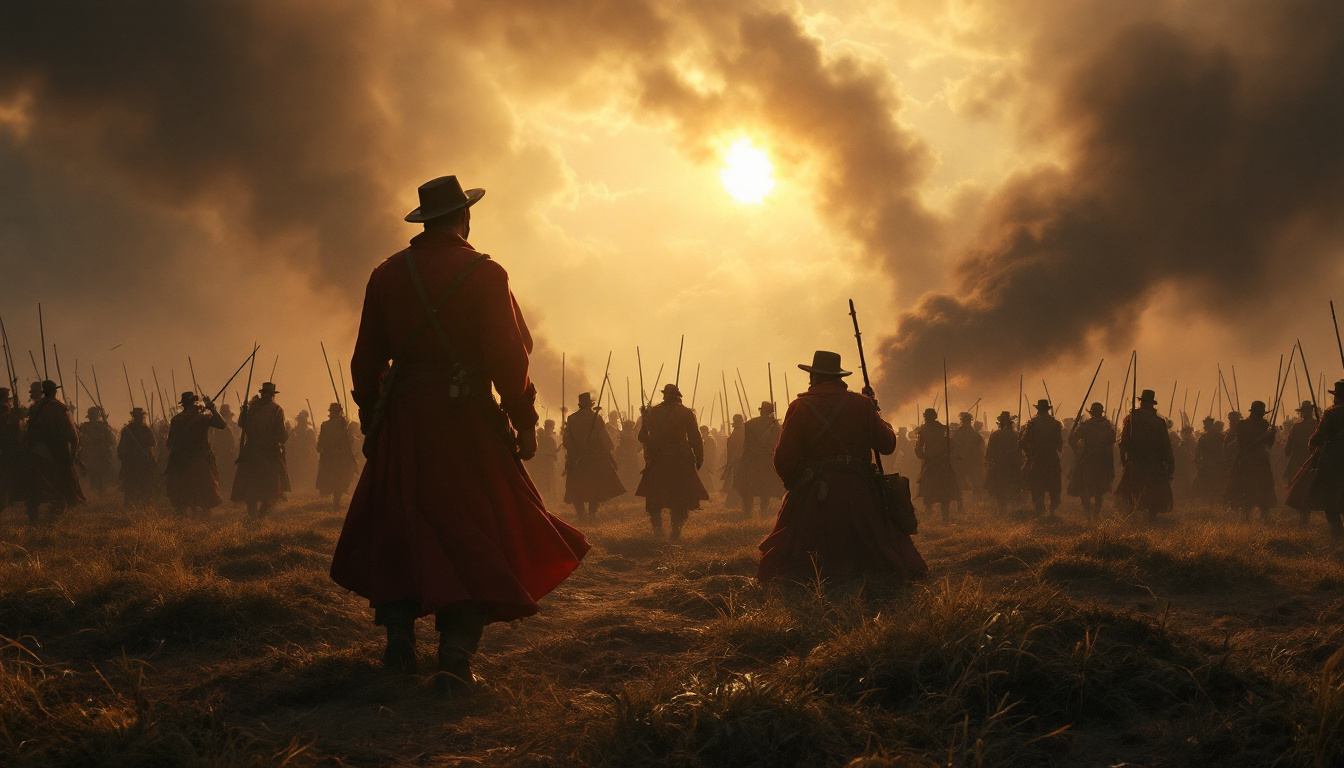
Here’s where it gets almost unbelievable. The first American attacks that morning were, frankly, a disaster. Wave after wave of torpedo bombers flew in low and got slaughtered — one squadron lost every single plane but came away with none of its torpedoes hitting home. It looked like the whole gamble was falling apart. But all that doomed sacrifice had pulled the Japanese fighter cover down low to the water, and it had caught the Japanese carriers at the worst possible moment: their decks crammed with fueled, armed planes being rearmed, fuel hoses everywhere, bombs stacked in the open.
And then, almost by accident, American dive bombers arrived overhead — high up, unguarded, and looking down at four aircraft carriers that might as well have been floating gasoline cans. In the space of about five or six minutes, they put three of those four carriers out of action. The fourth was finished off later that day. Historians have called it the most stunning reversal in naval history — months of momentum and an entire war turning on the span of a few minutes.
When the smoke cleared, Japan had lost all four of the carriers it brought, along with hundreds of its best-trained pilots it could never fully replace. The United States lost one carrier, the Yorktown. From that day forward, Japan was on the defensive in the Pacific and never truly got the initiative back. The whole tide of the war in the Pacific turned, in large part, on bad luck, brave men who flew into hopeless odds, and about five minutes over open ocean.
Also On This Day…
1783 — Two paper-makers floated a bag of hot air and changed the sky forever On June 4, 1783, in the marketplace of Annonay, France, brothers Joseph and Étienne Montgolfier gave the first public demonstration of a hot-air balloon. They burned straw and wool under the opening of a big fabric bag, the bag filled, and the whole thing rose roughly 3,000 feet into the air, drifted for about ten minutes, and landed more than a mile away — with absolutely nobody aboard. The Montgolfiers ran a paper factory, not a laboratory, and they reportedly believed it was the smoke lifting the balloon rather than the heat. They had the right invention for slightly the wrong reason. A few months later, humans were flying.
1919 — Congress finally said women could vote — and handed the decision to the states On June 4, 1919, the U.S. Senate passed the 19th Amendment by a vote of 56 to 25, clearing the last hurdle in Congress and sending the women’s suffrage amendment out to the states for ratification. The fight had dragged on for generations, and the Senate had blocked it before. Now the math finally worked: a two-thirds majority in both chambers, done. It still took another fourteen months and a single dramatic vote in Tennessee to push it over the finish line, but June 4 was the day Congress officially got out of the way and let the country decide.
1940 — Churchill told a beaten nation it would never surrender On June 4, 1940, just days after the miracle evacuation at Dunkirk, Winston Churchill stood up in the House of Commons and gave one of the most famous speeches in the English language. Britain had just barely pulled its army off the beaches of France, the situation was grim, and France was about to fall. Churchill didn’t sugarcoat any of it — and then he delivered the lines history remembers: “we shall fight on the beaches… we shall never surrender.” He sat down at 4:14 in the afternoon having turned a near-catastrophe into a rallying cry for an entire country that had every reason to give up and didn’t.
It’s a striking lineup for one date — a war’s tide turning on five minutes of luck, the first balloon climbing into the sky, half a country finally winning the right to vote, and a defiant nation refusing to quit. June 4 has a habit of landing on the days when everything was on the line and the long shot came through.
