
I have brushed my teeth twice a day for my entire life and somehow never asked a single question about them. Then I went down a rabbit hole one night and came back up genuinely rattled. Your teeth aren’t what you think they are, a garden snail is hiding thousands more than you, and that thing everyone “knows” about Washington’s wooden teeth? Completely false. Here are five facts that made me look at my own mouth differently.
Did you know your teeth aren’t actually bones?
This one broke my brain a little, because they sure look like bones. They’re white, they’re hard, they’re stuck in your skeleton — case closed, right? Nope. Bones are living tissue laced with blood vessels and collagen, and they can heal themselves when they break. Teeth can’t do any of that. The hard outer layer, enamel, has no living cells at all once it’s formed, which is exactly why a chipped tooth stays chipped forever while a cracked bone knits itself back together. Bones also contain marrow that makes blood cells; teeth just sit there doing the one job. So the next time someone calls teeth “the bones in your mouth,” you get to be insufferable about it.
Did you know enamel is the hardest thing your body makes — and the only part it can’t repair?
Tooth enamel is the toughest substance the human body produces, harder than any of your actual bones. It’s about 96% mineral, which is what lets you crunch through ice and apples and the occasional accidental popcorn kernel for decades. Here’s the cruel twist: it’s also the only structure in your body with zero ability to regenerate. Cut your skin, it heals. Break a bone, it mends. Wear a hole through your enamel, and your body just… shrugs. There are no living cells left in it to rebuild anything. You’re issued one set of enamel, and the planet’s most advanced biological machine has no backup plan for it. Floss accordingly.
Did you know a single garden snail has around 14,000 teeth — and some snails have 20,000?
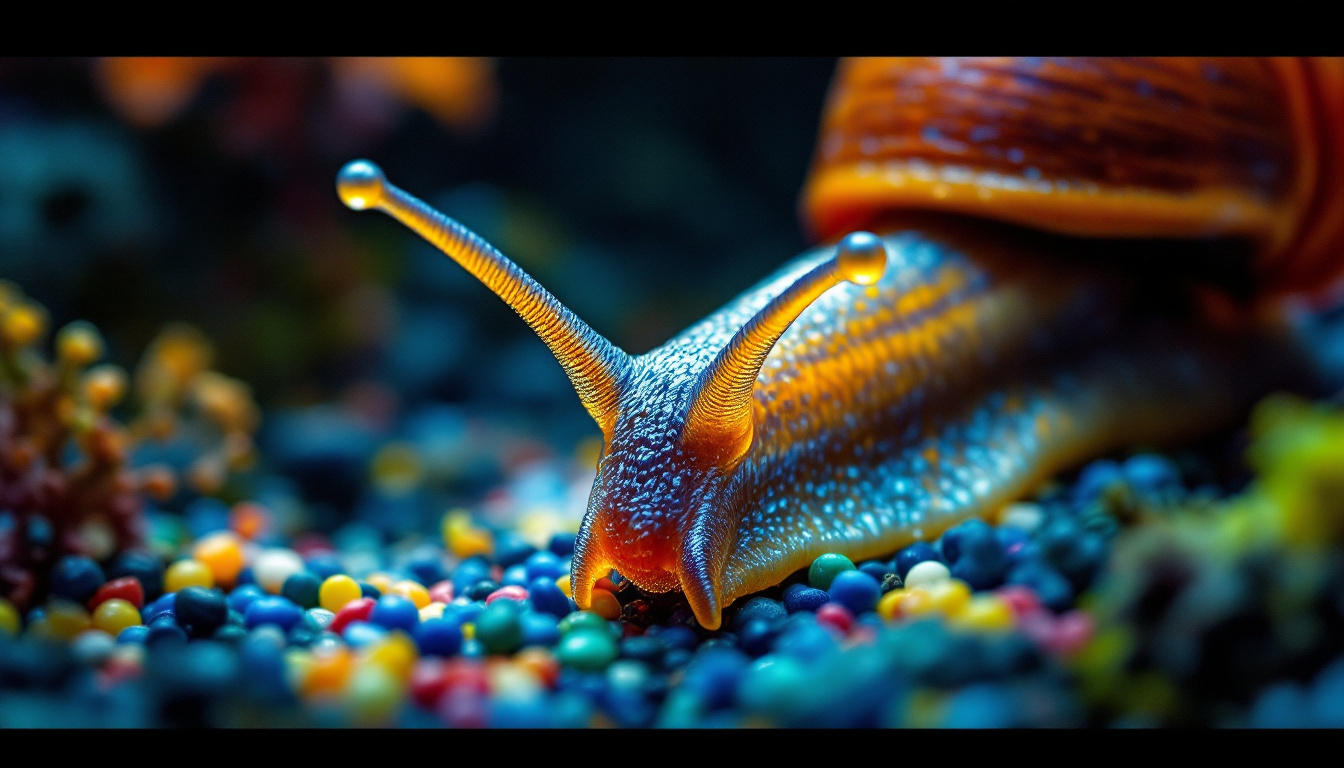
I genuinely read this three times. The little snail inching across your sidewalk is packing roughly 14,000 teeth, and some species carry as many as 20,000. They’re not chompers like ours — they sit in tidy rows on a ribbon-like structure called a radula, which works less like a jaw and more like a rasp or a cheese grater the snail drags across its food to scrape off tiny bits. Even stranger, a cousin of theirs, the limpet, has teeth made of the strongest natural material ever found on Earth — tougher than spider silk, thanks to mineral nanofibers woven through them. So the slowest animal in your yard is out here secretly winning the strongest-teeth award. I think about this constantly now.
Did you know a single shark can grow and lose tens of thousands of teeth in its lifetime?
A great white swims around with about 300 teeth at any given moment, lined up in rows like a conveyor belt. When a front tooth falls out — which happens constantly, because biting things is rough on dental work — a fresh one from the row behind it just slides forward to take its place. Over a full lifetime, a single shark can churn through as many as 30,000 teeth. Thirty thousand. Meanwhile I get two sets total and the second one has to last me 70 years. Somewhere out there a shark is on its 12,000th tooth without a care in the world, and I’m over here panicking about one sensitive molar.
Did you know George Washington’s dentures were never made of wood?
It’s one of the most repeated facts in American history, and it’s just not true. Washington battled terrible dental problems his whole adult life, and by the time he was president he wore full dentures — but they were never wooden. His sets were built from elephant and walrus ivory, gold, lead, and actual human and animal teeth, held together with little metal springs. So where did the wood myth come from? Most likely the ivory. Washington was fond of dark Madeira wine, and over time it stained the ivory and darkened the fine hairline cracks in it until the grain looked exactly like… wood. People saw the stained lines, assumed timber, and the legend snowballed for two centuries. The real story is far weirder than the myth, which is usually how it goes.
Send this to whoever still thinks George Washington had a mouth full of lumber — and to anyone who calls teeth “mouth bones.”
