
June 25th
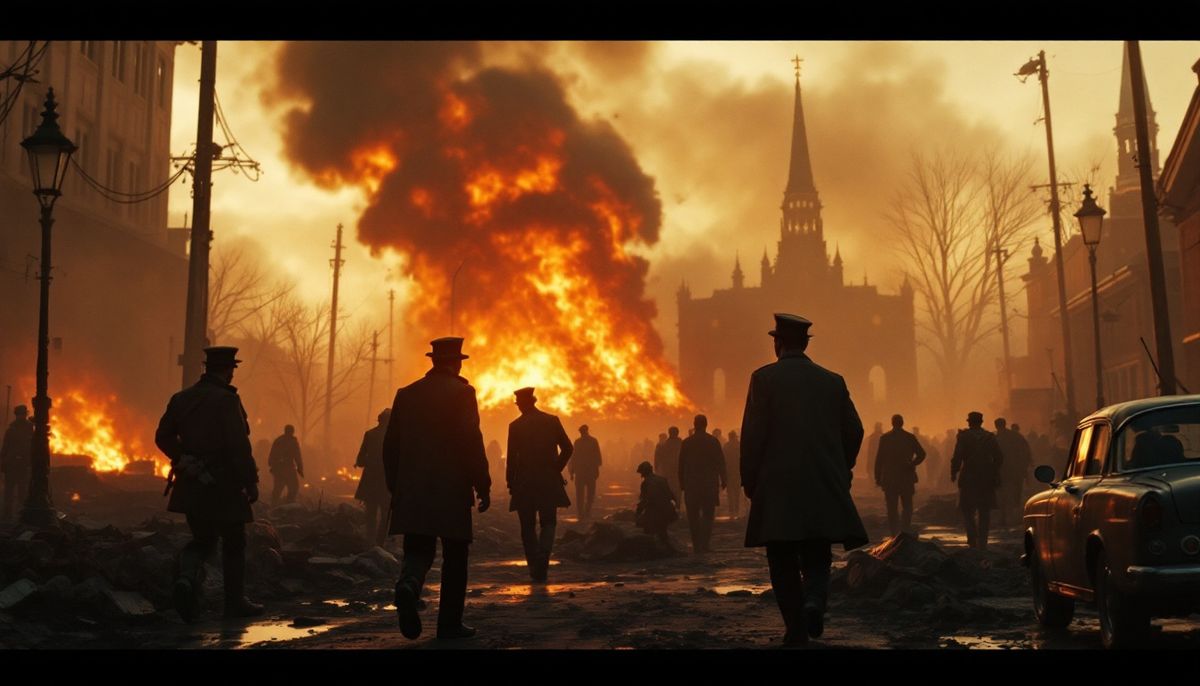
It was raining before dawn along the 38th parallel on June 25, 1950, when the quiet of the Korean countryside shattered. At 4:40 in the morning, the artillery of the North Korean People’s Army opened up across the rugged border that divided the peninsula, and within the hour more than 75,000 soldiers came pouring south. Soviet-built T-34 tanks rolled through the rice paddies. The South Korean army, lightly armed and caught flat-footed, reeled backward in confusion. The Cold War, until that morning a contest of speeches, spies, and standoffs, had suddenly turned hot.
The world Washington woke up to that Sunday was one it had not expected. Korea had been carved in two only five years earlier, when the Soviet Union and the United States divided the former Japanese colony at the 38th parallel — a line drawn almost casually by two young American officers studying a National Geographic map late one night in 1945. What began as a temporary administrative boundary had hardened into a frontier between two hostile governments, each claiming to be the rightful ruler of all Korea. Now the communist North had decided to settle the question by force.
The response from across the ocean was swift and, for its era, remarkable. With the Soviet delegate boycotting the proceedings and unable to cast a veto, the United Nations Security Council voted to condemn the invasion and call on member nations to repel it. Two days later, President Harry Truman ordered American air and naval forces to the defense of South Korea, committing the United States to a war it had not sought, on a peninsula most Americans could not have found on a map. Truman pointedly refused to call it a war at all, naming it instead a “police action.”
For the three years that followed, the fighting surged up and down the peninsula like a violent tide — Seoul captured, lost, recaptured, and lost again. American GIs froze through brutal Korean winters and bled through scorching summers, fighting first the North Koreans, then waves of Chinese soldiers who crossed the Yalu River by the hundreds of thousands. By the time an armistice finally silenced the guns in 1953, the border had returned almost exactly to where it began: the 38th parallel.
But the morning of June 25 had changed the world far beyond Korea’s borders. It convinced Washington that communism would be tested with tanks and not merely words, hardening the doctrine of containment that would shape American foreign policy for the next four decades. More than 36,000 Americans would never come home. And the line that two officers had drawn over a map in a single evening became the most heavily fortified border on Earth — a scar across the peninsula that endures to this very day, the last cold frontier of a war that technically has never ended.
Also On This Day…
1876 — Custer Rides Into the Valley of His Last Stand On the warm afternoon of June 25, 1876, Lieutenant Colonel George Armstrong Custer led his 7th Cavalry down toward the Little Bighorn River in the Montana Territory, convinced he was about to win a swift and glorious victory. He had badly miscalculated. Waiting in the valley below was one of the largest gatherings of Plains warriors ever assembled — thousands of Lakota Sioux, Northern Cheyenne, and Arapaho, led by chiefs including Sitting Bull and Crazy Horse. Custer divided his regiment and attacked. Within an hour, he and every man in his immediate command — some 210 soldiers — lay dead on the grassy ridges. Known to the tribes as the Battle of the Greasy Grass, it was the most stunning Native American victory and the worst U.S. Army defeat of the long Plains Indian wars, and it seared “Custer’s Last Stand” into American legend forever.
1788 — Virginia Tips the Scales for a New Nation On June 25, 1788, after three sweltering weeks of debate in Richmond, the delegates of Virginia’s ratifying convention voted 89 to 79 to adopt the United States Constitution, making the largest and most influential state the tenth to join the new union. The fight had been fierce. The fiery orator Patrick Henry thundered against the document, warning that it threatened the liberties Americans had just bled to win, while the soft-spoken James Madison patiently defended it clause by clause. Madison’s promise that a Bill of Rights would follow helped sway the wavering. With Virginia in the fold — home to Washington, Jefferson, and Madison himself — the Constitution’s success was all but assured, and the American experiment had its anchor.
2009 — The King of Pop Falls Silent On the afternoon of June 25, 2009, the world stopped to absorb news that seemed impossible: Michael Jackson, the King of Pop, was dead at fifty. He had collapsed at his rented mansion in Los Angeles while preparing for a comeback concert series meant to remind the world of his genius. Paramedics rushed him to UCLA Medical Center, where he was pronounced dead of acute propofol intoxication, administered by his personal physician. Within minutes, grief rippled across the planet — websites buckled under the traffic, radio stations abandoned their playlists, and millions mourned the boy from Gary, Indiana, who had grown into the most famous entertainer alive. The moonwalk, the sequined glove, the songs that defined a generation — all of it suddenly belonged to history.
From a rain-soaked border where the Cold War caught fire, to a Montana ridge where a famous soldier met his end, to the convention hall that gave a young nation its foundation, June 25th carries the weight of moments that turned the course of history in a single day. The line drawn on a map, the charge into the valley, the vote in the crowded room — none seemed to know, in the moment, just how much the world would hang upon them.
